Melhores práticas e estratégias para ajudar a fortalecer os provedores de anestesia contra o estresse e priorizar seu bem-estar geral.
O que é fadiga?
A fadiga é um fenômeno psicofisiológico que ocorre naturalmente após um período prolongado ou intenso de atividade física ou intelectual, resultando em dificuldade em continuar o esforço ou trabalho. Ocorre em situações rotineiras e de baixo estresse, em vez de em situações de emergência, onde a adrenalina entra em ação. É reversível, através do descanso adequado. É geralmente associado a respostas prejudicadas, falta de alerta, má avaliação de risco, aumento da tomada de riscos e decisões de baixa qualidade.
Quais são os efeitos da fadiga?
Após 12 horas acordado:
A empatia começa a diminuir;
O raciocínio lógico fica mais difícil;
A vigilância se torna mais variável;
As habilidades motoras e cognitivas pioram.
Após 16 a 18 horas acordado:
Nosso desempenho é tão ruim quanto se estivéssemos sob a influência de álcool;
Nosso humor piora;
Achamos muito mais difícil pensar com flexibilidade e responder a situações que mudam rapidamente;
Estamos mais propensos a correr riscos.
Após a nona hora consecutiva de trabalho:
O risco de nos envolvermos em um acidente aumenta.
Após um turno de 12 horas, temos duas vezes mais chances de sofrer um acidente dirigindo para casa do que após um turno de 8 horas.
Fonte: Fighting fadigue together
Fatigue in anaesthesiology Call for a change of culture and regulations.
RECURSOS
- Fatigue among anaesthesiologists in Europe: Findings from a joint EBA/NASC survey Camilleri Podesta, Anne Marie; Redfern, Nancy; Abramovich, Igor; Mellin-Olsen, Jannicke; Oremuš, Krešimir; Kouki, Pinelopi; Guasch, Emilia; Novak-Jankovic, Vesna; Sabelnikovs, Olegs; Bilotta, Federico; Grigoras, Ioana. Fatigue among anaesthesiologists in Europe: Findings from a joint EBA/NASC survey. European Journal of Anaesthesiology 41(1):p 24-33, January 2024. | DOI: 10.1097/EJA.0000000000001923
- Managing fatigue as part of a safety culture A blog from Nancy Redfern, Emma Plunkett and Roopa McCrossan – – Staff safety – Patient Safety Learning – the hub (pslhub.org)
- Why we need to manage fatigue in the NHS A blog from Nancy Redfern and Emma Plunkett – Staff safety – Patient Safety Learning – the hub (pslhub.org)
- Fatigue amongst anaesthesiology and intensive care trainees in Europe: A matter of concern Abramovich, Igor; Matias, Bernardo; Norte, Gustavo; Zawadka, Mateusz; Bilotta, Federico; Buzincu, Iulian; Camilleri Podesta, Anne Marie; De Hert, Stefan; Grigoras, Ioana; Pintilie, Georgiana; Smallwood, Aidan; Trinks, Alexandra; Redfern, Nancy. European Journal of Anaesthesiology :10.1097/EJA.0000000000001849, May 12, 2023. | DOI: 10.1097/EJA.0000000000001849
- Fatigue in anaesthesiology – call for a change of culture and regulations Nancy Redfern, Federico Bilotta, Igor Abramovich, Ioana Grigoras, in European Journal of Anaesthesiology 40(2):p 78-81, February 2023.
- A national survey of out-of-hours working and fatigue in consultants in anaesthesia and paediatric intensive care in the UK and Ireland McClelland L, Plunkett E, McCrossan R, Ferguson K, Fraser J, Gildersleve C, Holland J, Lomas JP, Redfern N, Pandit JJ.; Anaesthesia. 2019 Dec;74(12):1509-1523. doi: 10.1111/anae.14819. Epub 2019 Sep 2. PMID: 31478198.
- A national survey of the effects of fatigue on trainees in anaesthesia in the UK McClelland L, Holland J, Lomas JP, Redfern N, Plunkett E. Anaesthesia. 2017 Sep;72(9):1069-1077. doi: 10.1111/anae.13965. Epub 2017 Jul 5. PMID: 28681546.
- Fatigue management in healthcare: it is a risky business Dawson, D. and Thomas, M.J.W. (2019); Anaesthesia, 74: 1493-1496. https://doi.org/10.1111/anae.14833
- For nature cannot be fooled. Why we need to talk about fatigue Farquhar, M. (2017), Anaesthesia, 72: 1055-1058. https://doi.org/10.1111/anae.13982
- Commuting Accidents among Non-Physician Staff of a Large University Hospital Center from 2012 to 2016: A Case-Control Study Ponsin A, Fort E, Hours M, Charbotel B, Denis MA; Int J Environ Res Public Health. 2020 Apr 25;17(9):2982. doi: 10.3390/ijerph17092982. PMID: 32344841; PMCID: PMC7246704.
- Patient Safety Learning – Fatigue resources available on the hub
- Fight Fatigue in UK – Information pack and resources developed by the UK Joint Fatigue Group
Burnout
- Physician burnout undermines safe healthcare BMJ 2022; 378 doi: https://doi.org/10.1136/bmj.o2157
- Associations of physician burnout with career engagement and quality of patient care: systematic review and meta-analysis Alexander Hodkinson, et all | BMJ 2022;378:e070442 | doi: 10.1136/bmj-2022-070442
- Burnout in emergency medicine professionals after 2 years of the COVID-19 pandemic: a threat to the healthcare system? Petrino, Robertaa; Riesgo, Luis Garcia-Castrillob; Yilmaz, Basakc. . European Journal of Emergency Medicine 29(4):p 279-284, August 2022. | DOI: 10.1097/MEJ.0000000000000952
- Burnout in Healthcare Workers: Prevalence, Impact and Preventative Strategies De Hert S., Local Reg Anesth. 2020 Oct 28;13:171-183. doi: 10.2147/LRA.S240564. PMID: 33149664; PMCID: PMC7604257.
- Burnout prevalence among European physicians: a systematic review and meta-analysis Hiver, C., Villa, A., Bellagamba, G. et al. Burnout prevalence among European physicians: a systematic review and meta-analysis. Int Arch Occup Environ Health 95, 259–273 (2022). https://doi.org/10.1007/s00420-021-01782-z
- Burnout in nursing: a theoretical review Dall’Ora, C., Ball, J., Reinius, M. et al. Burnout in nursing: a theoretical review. Hum Resour Health 18, 41 (2020). https://doi.org/10.1186/s12960-020-00469-9
- Burnout syndrome in orthopaedic and trauma surgery residents in France: A nationwide survey
- Grégoire Faivre a, Hugo Kielwasser b, Mickaël Bourgeois a, Marie Panouilleres a, François Loisel a, Laurent Obert a, Revue de Chirurgie Orthopédique et Traumatologique, Volume 104, Issue 8, https://doi.org/10.1016/j.rcot.2018.09.143.
- Physician burnout Gagan Bhatnagar, The Lancet, February 01, 2020DOI:https://doi.org/10.1016/S0140-6736(19)32612-1
- Nurses’ burnout and associated risk factors during the COVID-19 pandemic: a systematic review and meta-analysis Galanis P, Vraka I, Fragkou D, Bilali A, Kaitelidou D.; J Adv Nurs. 2021 Aug;77(8):3286-3302. doi: 10.1111/jan.14839. Epub 2021 Mar 25. PMID: 33764561; PMCID: PMC8250618.
CARÊNCIAS
- Nurses’ motivations to leave the nursing profession: A qualitative meta-aggregation Wilmieke Bahlman-van Ooijen, Simon Malfait, Getty Huisman-de Waal, Thóra B. Hafsteinsdóttir Journal of Advanced Nursing, first published: 20 May 2023, https://doi.org/10.1111/jan.15696
- Bucharest Declaration on health and care workforce. High-level Regional Meeting on Health and Care Workforce in Europe: time to act, 22–23 March 2023, Bucharest, Romania (who.int)
- Nurses’ burnout and associated risk factors during the COVID-19 pandemic: a systematic review and meta-analysis Galanis P, Vraka I, Fragkou D, Bilali A, Kaitelidou D. Nurses’ burnout and associated risk factors during the COVID-19 pandemic: a systematic review and meta-analysis. medRxiv; 2020. DOI: 10.1101/2020.11.24.20237750.
- Healthcare: shortage of 13 million nurses expected by 2030 World Economic Forum
- Staff Shortages • FUND OUR NHS
- Nursing workforce in crisis even before pandemic reveals RCN report | News | Royal College of Nursing
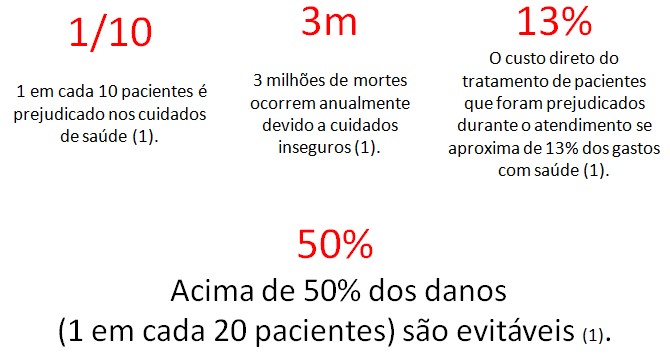
Fonte: 1-www.who.org 2-www.oecd.org